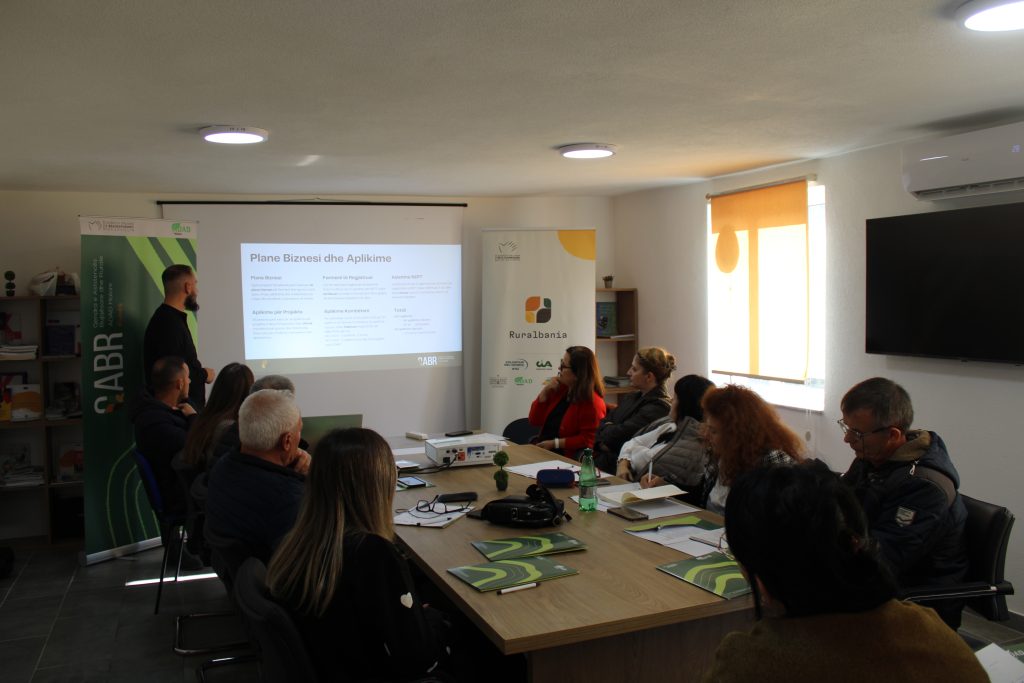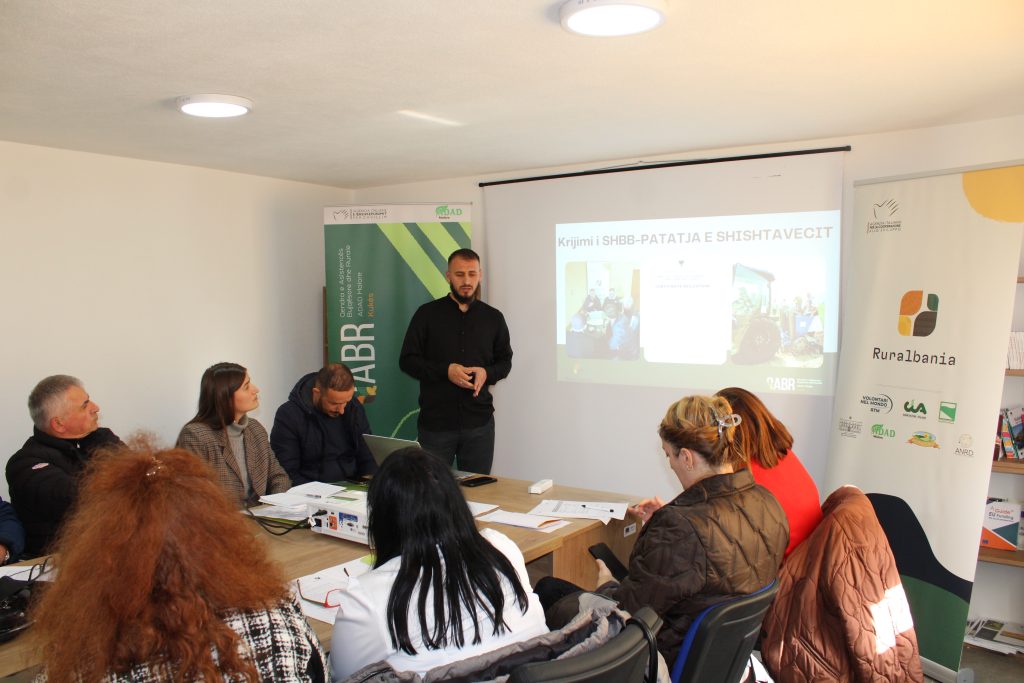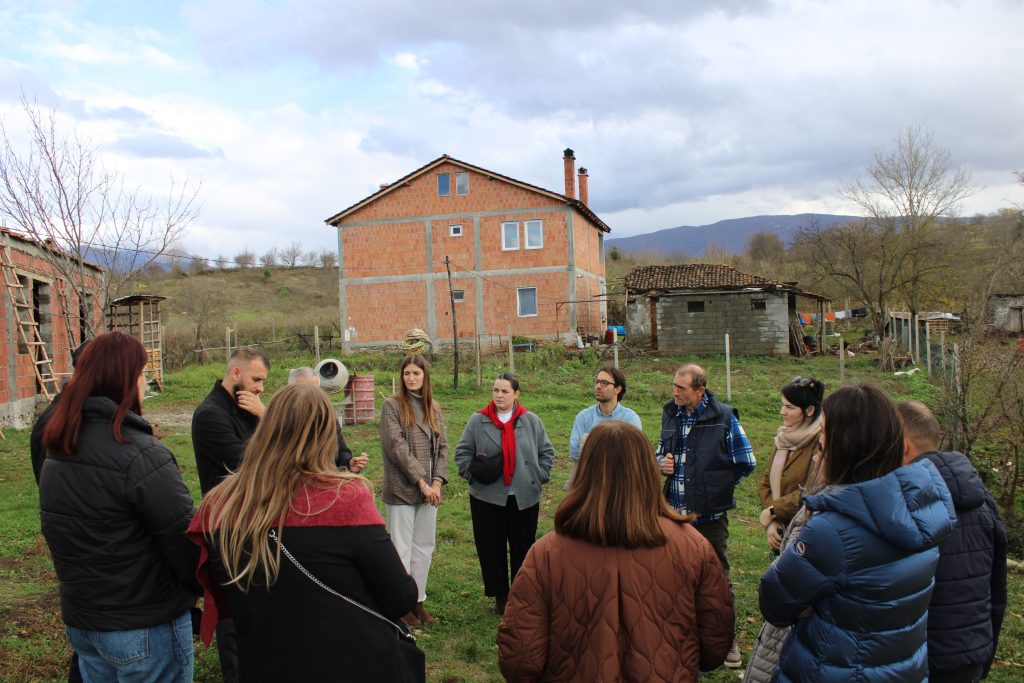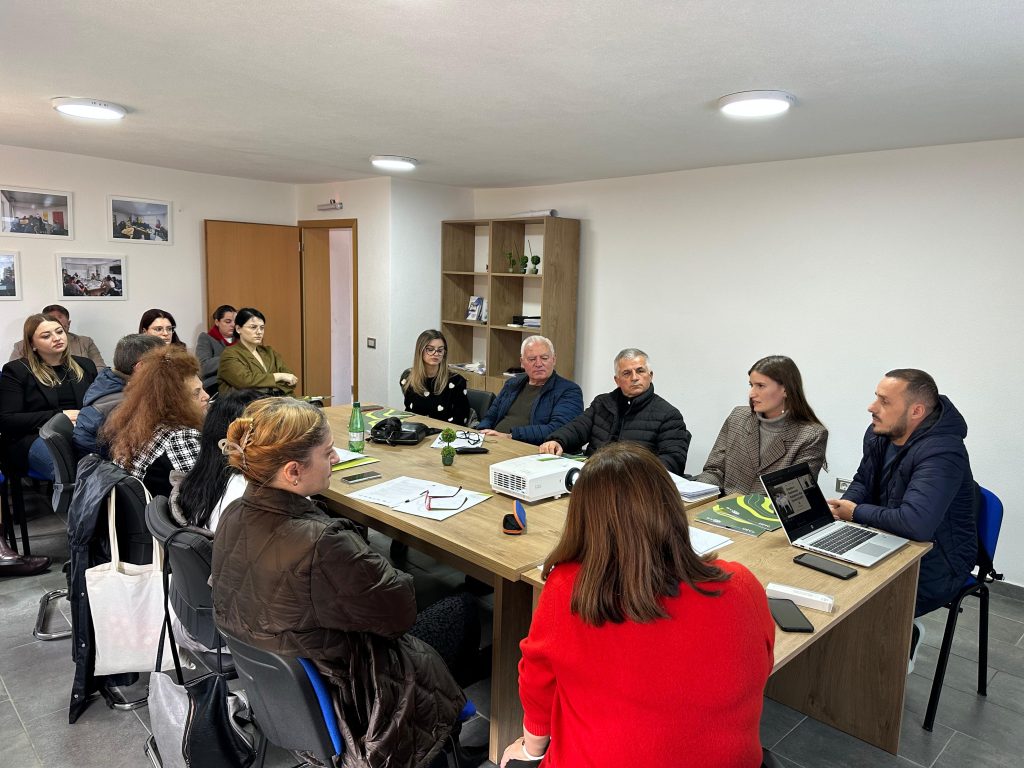
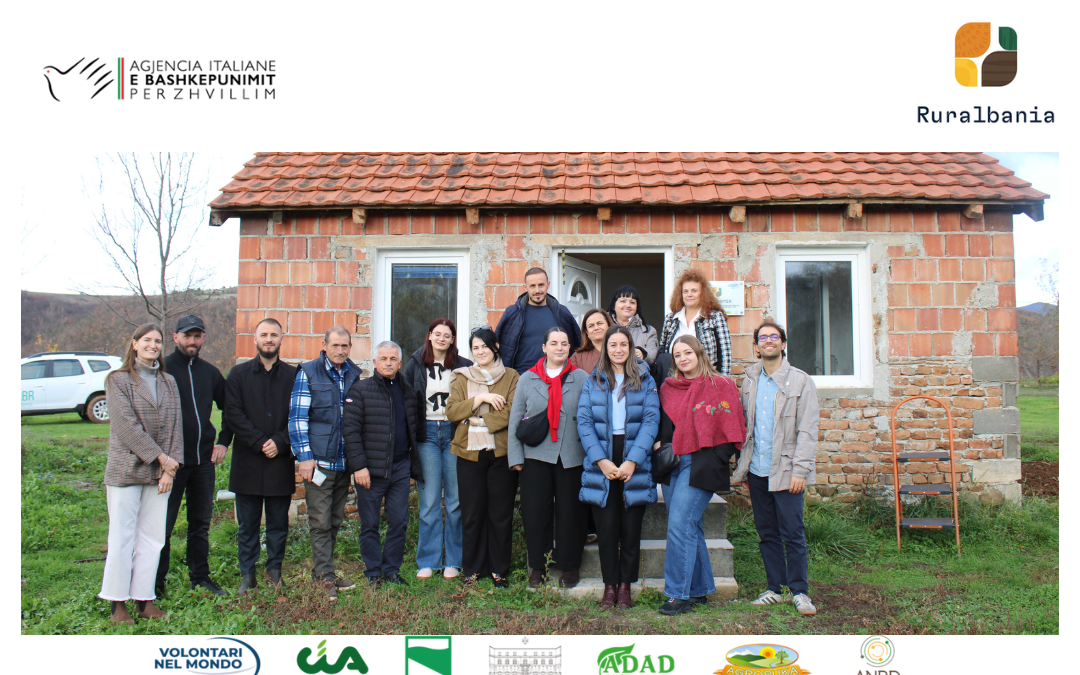
The travelling workshop in the CAAR Kukës exposed participants to rural realities, local challenges, and the important role of CAAR in strengthening farmers and small-scale producers.
On 21 November 2025, institutional representatives and organizations active in rural and agricultural development took part in a travelling workshop held in Kukës and Has area. The activity combined field visits, knowledge sharing, and networking, allowing participants to learn about the model of the CAARs.
The workshop created a unique environment to understand the role of CAARs and to discuss the challenges and opportunities related to the sustainability of this model, which is transforming the way farmers and small producers receive information, assistance, and professional support. Participants were also able to observe rural realities, visit a local farm that benefits from CAAR services, and engage in open conversations with local farmers.
The activity began at the NOK Center, a community space managed by the Municipality of Kukës. The meeting opened with remarks by Hafuz Domi, Executive Director of ADAD Malore, who emphasized that Kukës Region- due to socio-economic indicators below the national average – has a high need for accessible, quality agricultural and rural advisory services close to farmers. According to him, the success of CAAR Kukës lies in the strong synergy created with local government, the expertise provided in agricultural cooperation, and the wide range of trainings offered. “CAARs are an innovation for Albania and have supported investments in farms,” he noted.
Evelina Azizaj, Coordinator at ANRD, highlighted that the CAARs model is being presented at a time when the Albanian Government has started implementing a pilot programme to decentralize agricultural and rural extension services in four pilot municipalities. She stressed the importance of recognizing CAARs as a reference practice that can be supported, applied, and replicated more widely within these public efforts.
Lavinia Sgammini, Project Coordinator of Ruralbania at RTM-Volontari nel Mondo, underlined that the core of CAARs is the public-private partnership- an approach that, according to her, has been the key to the model’s success. CAAR Kukës, operated by ADAD Malore in cooperation with the Municipality of Kukës and AREB, is now a reference point for farmers in the region and a practice with strong potential for replication.
Representing the Municipality of Kukës, Gladiola Ismailaj from the Projects and EU Integration Office stated that the close cooperation with CAAR has strengthened trust and produced concrete results. “Kukës is a highly agricultural municipality, where 72% of employed people work in agriculture. The data collected by the CAAR is extremely valuable for our projects and applications,” she said.
Following the opening remarks, Edison Axhami from the CAAR Kukës team presented the Center’s mission, core values, and main service categories.
What do CAARs offer?
CAARs represent a new service model that places farmers at the centre and brings institutions closer to rural communities. CAAR Kukës is one of the strongest examples of this approach: a field-oriented, highly practical service built on a public-private partnership and dedicated to helping small producers become more informed, more formalized, and more competitive.
CAAR provides:
- professional technical assistance,
- investment advisory services for farms,
- support with applications for subsidies and development projects,
- on-site practical training,
- support for formalizing rural businesses.
In addition, CAAR plays an important role in collecting and updating data on farmers and agricultural production-information which local institutions use for planning and decision-making.
What sets CAAR Kukës apart from traditional models is its continuous presence in the field. Its coverage area includes Kukës, Has, and Tropoja – one of the most challenging and remote rural territories in Albania, with scattered villages, limited infrastructure, and long distances between settlements. Despite these challenges, the CAAR team has established a consistent and reliable field practice, remaining present “from Cërnica to Dobërdol,” as proudly stated during the meeting.
This direct presence has built trust with farmers and produced measurable results:
- increased formalization of agricultural activities;
- improved capacities and practical knowledge;
- enhanced farm investments;
- establishment of producer organizations;
- certification of local products (e.g., Shishtavec potatoes);
- increased access to support schemes and development programmes.
CAAR also serves as a bridge between local actors and central institutions. The Municipality of Kukës, AREB, Agropika, MARD, and project partners such as Ruralbania, ADAD Malore, AgroPuka, and ANRD form a partnership that has made this model functional and effective.
Operating in such a difficult and dispersed area, CAAR Kukës demonstrates that agricultural services can be truly effective only when delivered close to farmers, through ongoing field presence and strong partnerships. For this reason, the model has significant value for expansion and replication in other municipalities, especially in the context of decentralizing agricultural extension services.
Field visit to a beneficiary farm
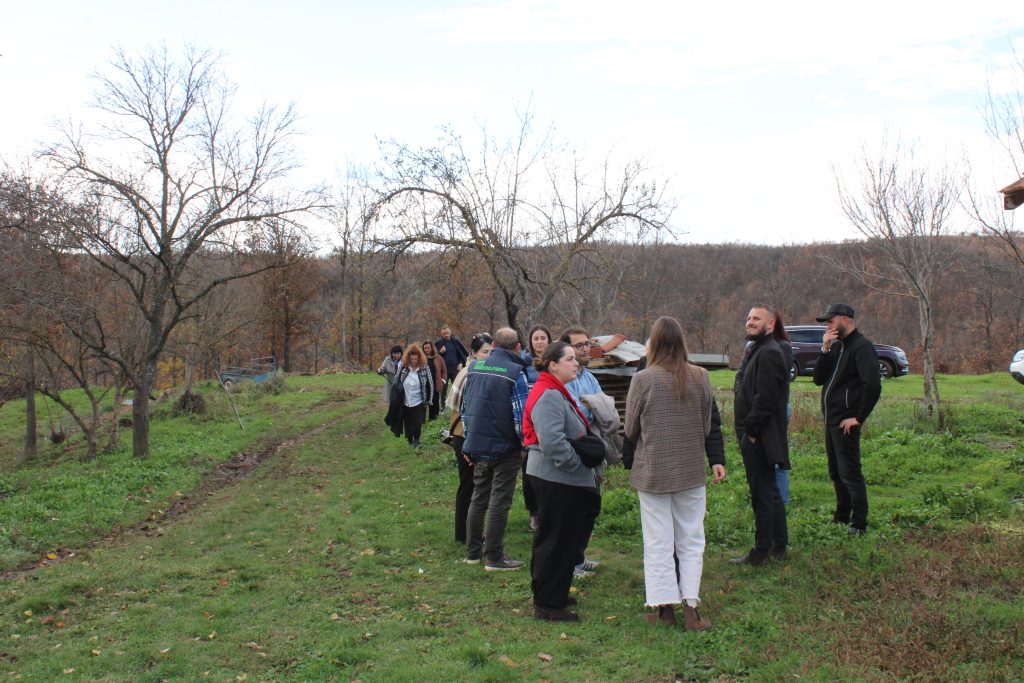
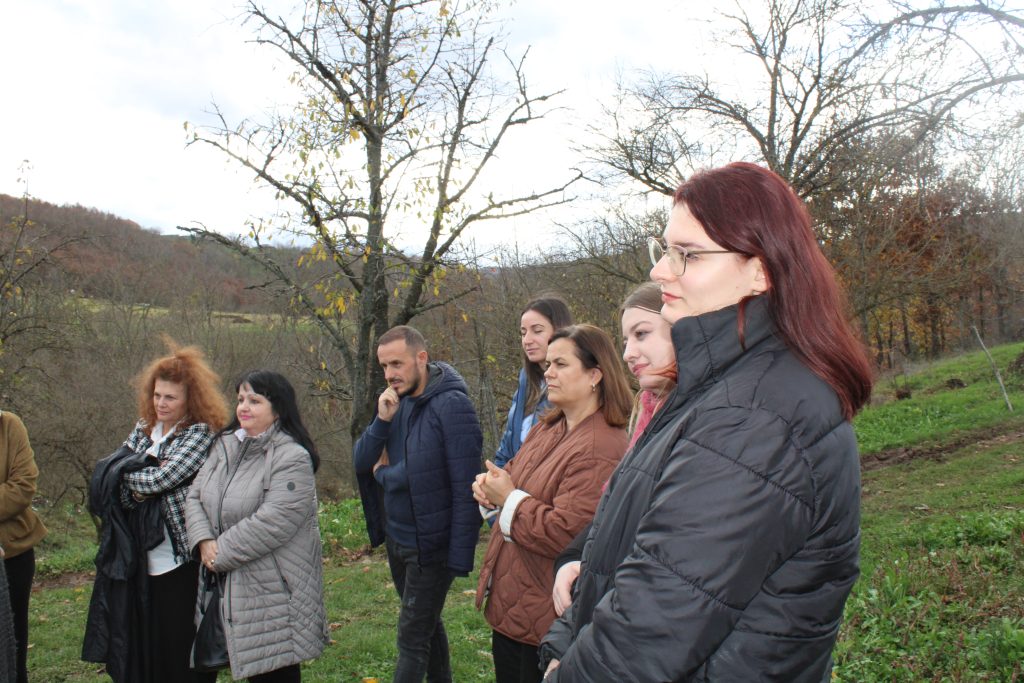
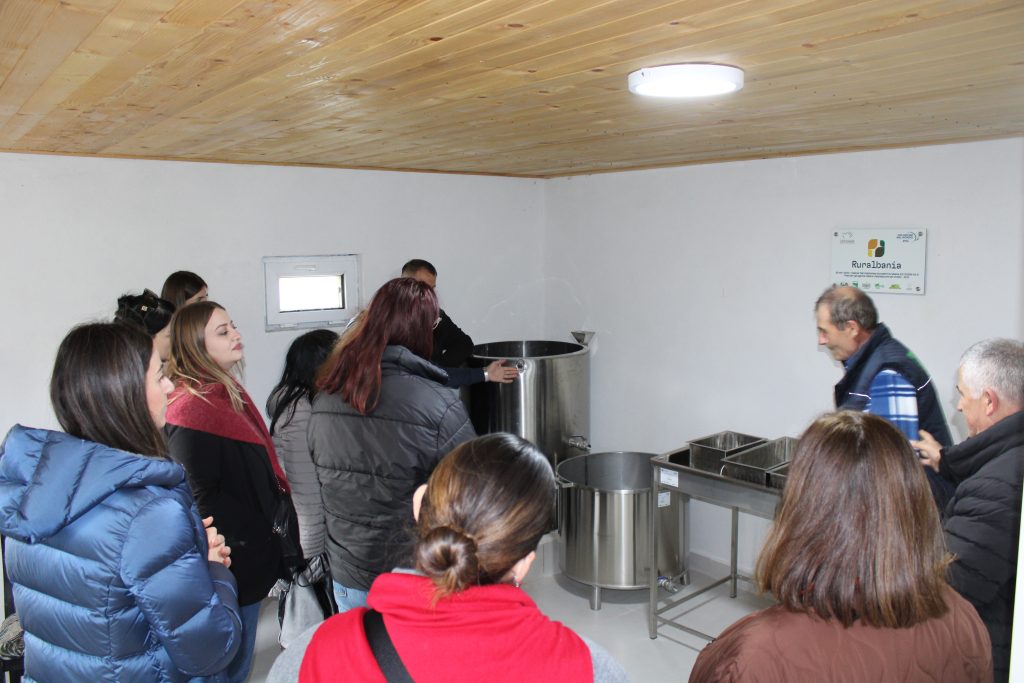
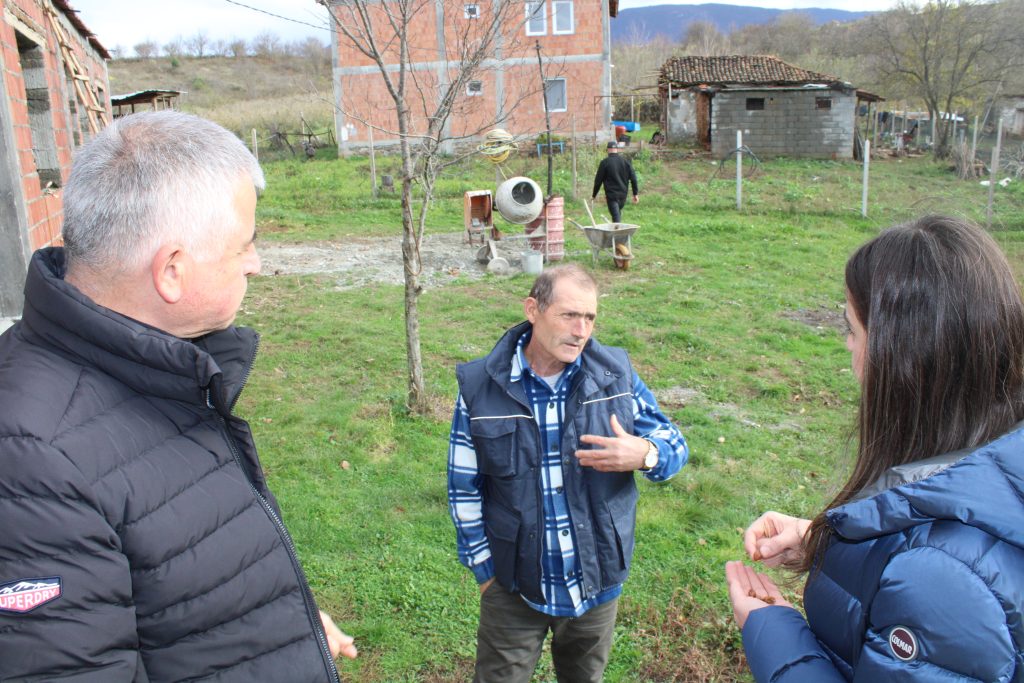
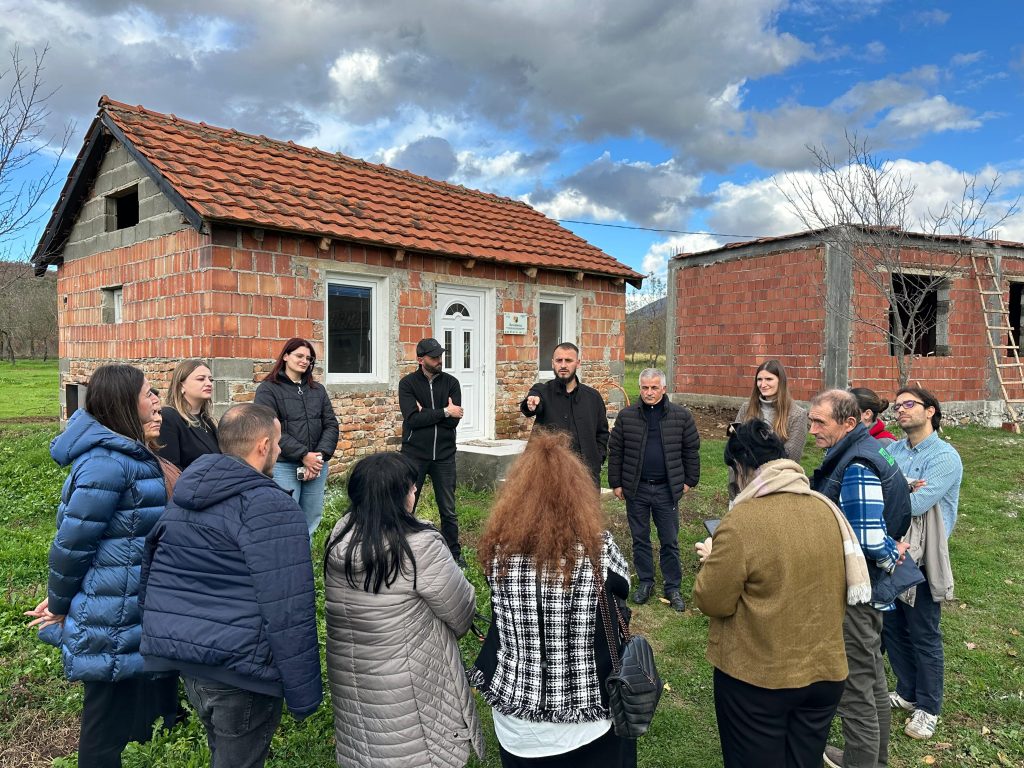
Participants visited the Dibra family farm in Has, one of the farms benefiting from CAAR services. Through discussions with the family and the CAAR team, participants learned about farm improvements enabled by professional advisory and investment support. One of the main investments is a small milk processing unit (minibaxho) built by the family and equipped with appropriate machinery, including a cooling room financed by the Ruralbania project. The unit will operate using wood-fired heating, a practical solution given the area’s climatic and economic conditions.
Despite these positive developments, the visit also highlighted the difficult realities of living and working in a remote mountainous area. Access to the farm is challenging due to poor road connections; on rainy days like the day of the visit, walking or driving with regular vehicles becomes nearly impossible. Yet the dedication of the family, working daily to build a livelihood through effort and resilience, remains remarkable. The isolation of rural life is even more evident amid continued depopulation.
The farm also benefits from livestock subsidies, but the family noted that support remains insufficient. Moreover, the minimum livestock threshold required to receive subsidies is seen as limiting. They emphasized that support should be proportional to the real number of animals—whether 10, 50, or 300.
CAAR Kukës, together with its local and international partners, shows that rural change comes through simple, practical, and sustainable solutions tailored to the real needs of farmers and small producers.
On 1 January, with the completion of the Ruralbania project, CAAR Kukës is expected to be officially transferred to the Municipality of Kukës and operate based on income from the services it provides. Since there is no other advisory office for farmers in the area, the continuation of CAAR’s work is of great importance for the local community.
Participants appreciated the CAAR model as a successful practice with strong potential for replication in other municipalities. However, discussions on its sustainability highlighted that ensuring continuous operation of CAARs remains a critical challenge.
***The traveling workshop: “Partnerships for new agricultural advisory services” is organized in the frame of the project Ruralbania: Support and Promotion of Traditional Agricultural Production supported by the Italian Agency for Development Cooperation (AICS) and implemented by the Italo-Albanian consortium led by RTM -Volontari nel Mondo, in partnership with ANRD, ADAD Malore, and AgroPuka.