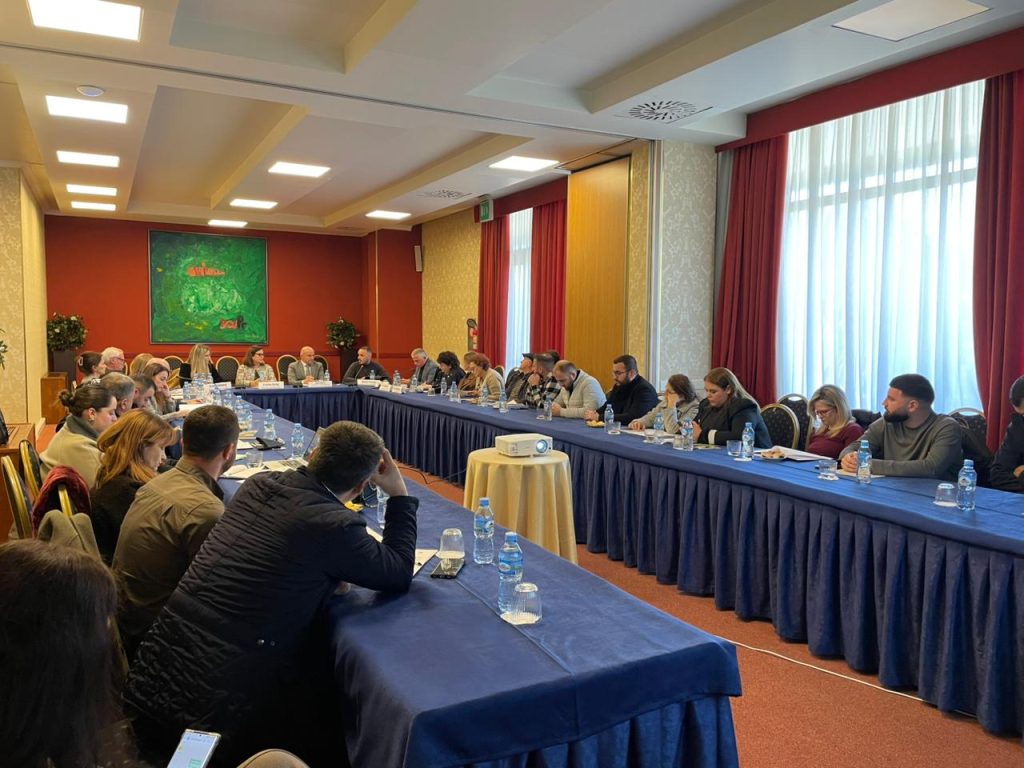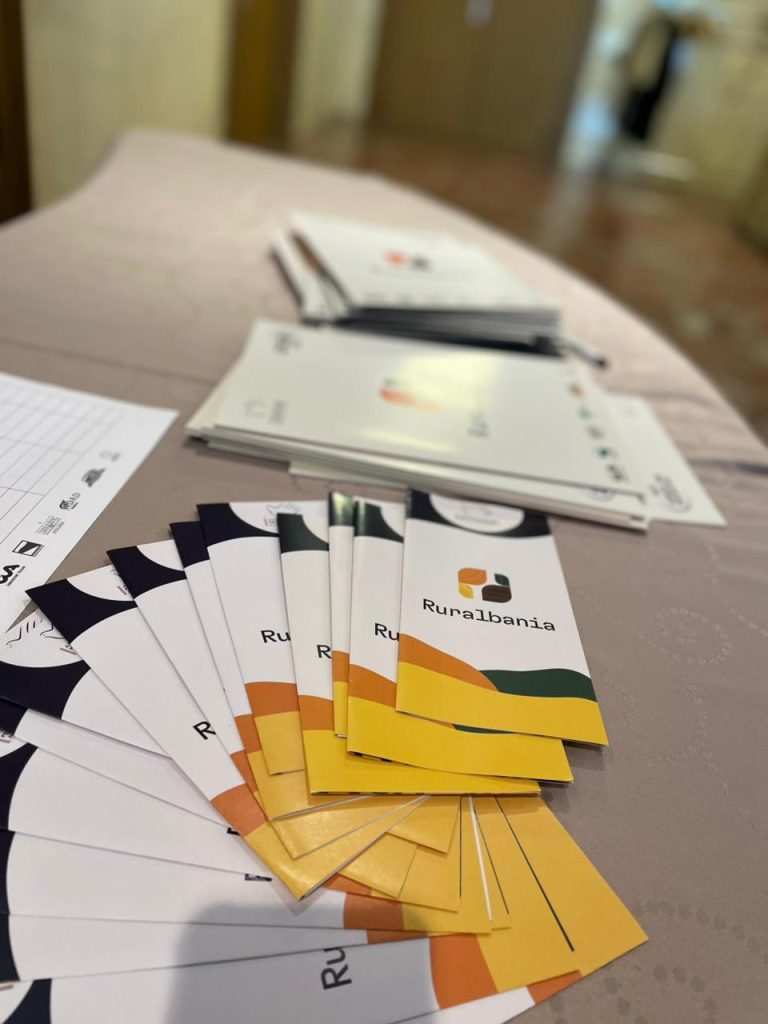
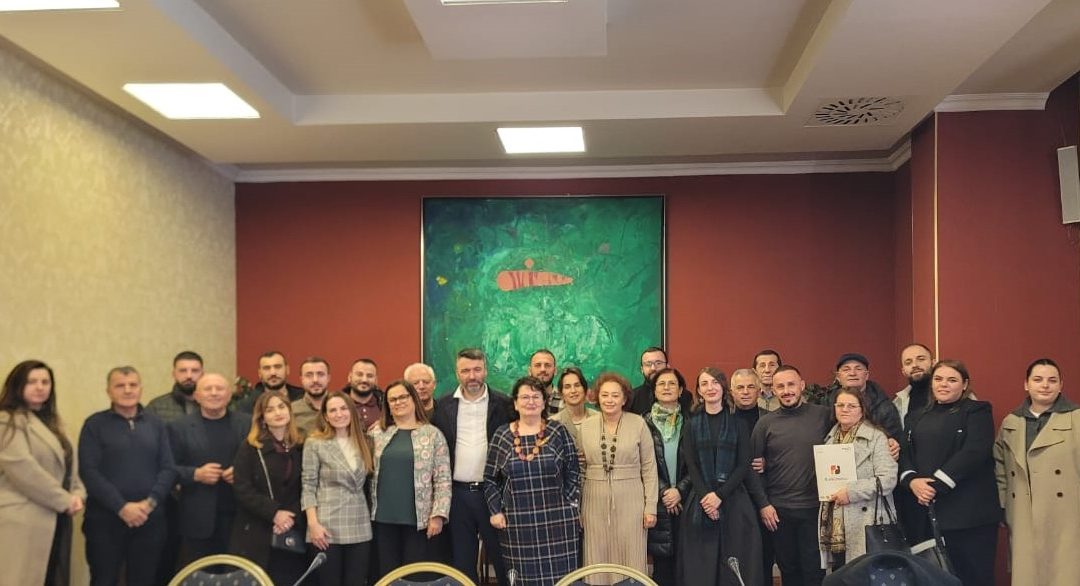
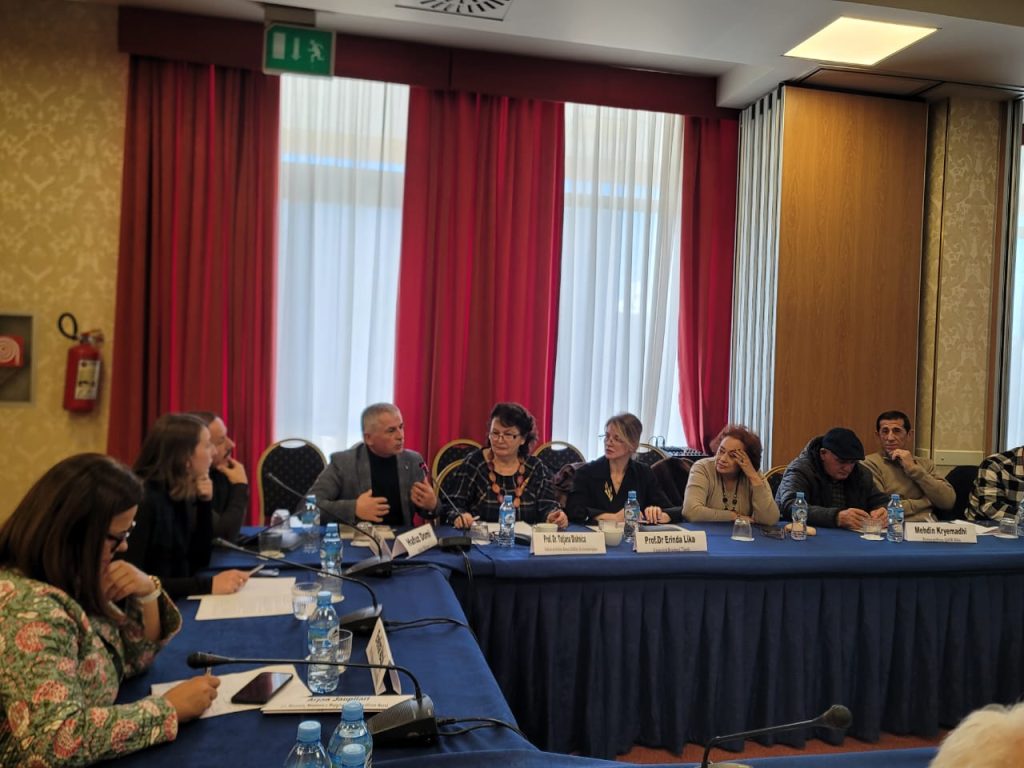
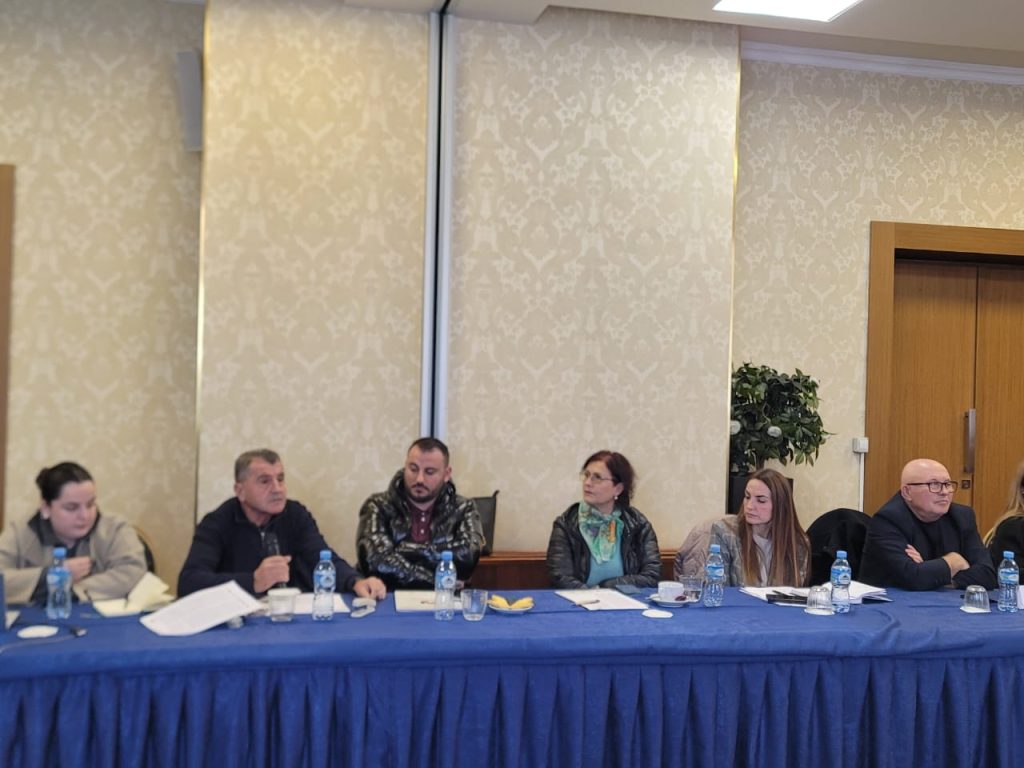
At a time when Albanian agriculture is facing increasingly complex challenges,from alignment with EU standards to the need to enhance competitiveness and better include small-scale farmers, stakeholder dialogue grounded in concrete experience is essential for shaping effective policies. It was in this spirit that the Policy Dialogue Event on Agricultural Information and Advisory Services was held, bringing together 35 participants from the Ministry of Agriculture and Rural Development, the Agency for Agricultural and Rural Development (AZHBR), public institutions such as the Seed Entity, Regional Agricultural Extension Bodies (AREBs), municipalities, the Agricultural University of Tirana, local associations, partners of the Ruralbania project, and beneficiary farmers.
The event provided a space for reflection and exchange on the experience and policy implications of the Agricultural and Rural Assistance Centres (QABRs), an innovative model piloted under the RURALBANIA project. The model aims to bring advisory services closer to farmers, particularly smallholders and those living in mountainous and remote rural areas.
From practice to policy-making
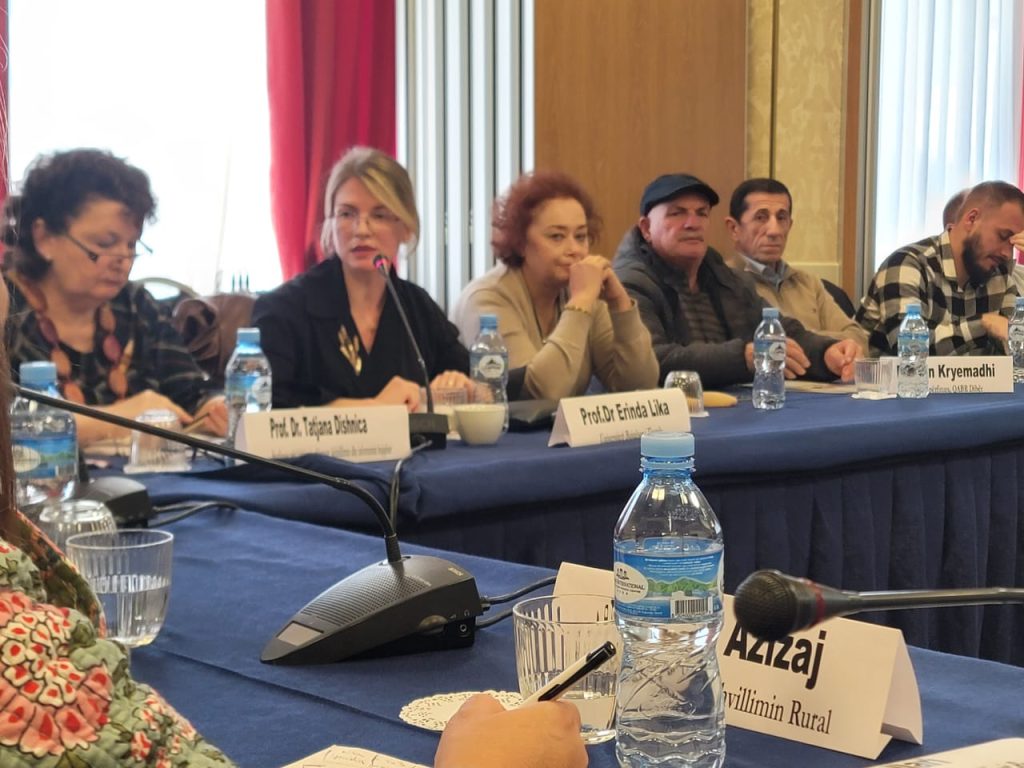
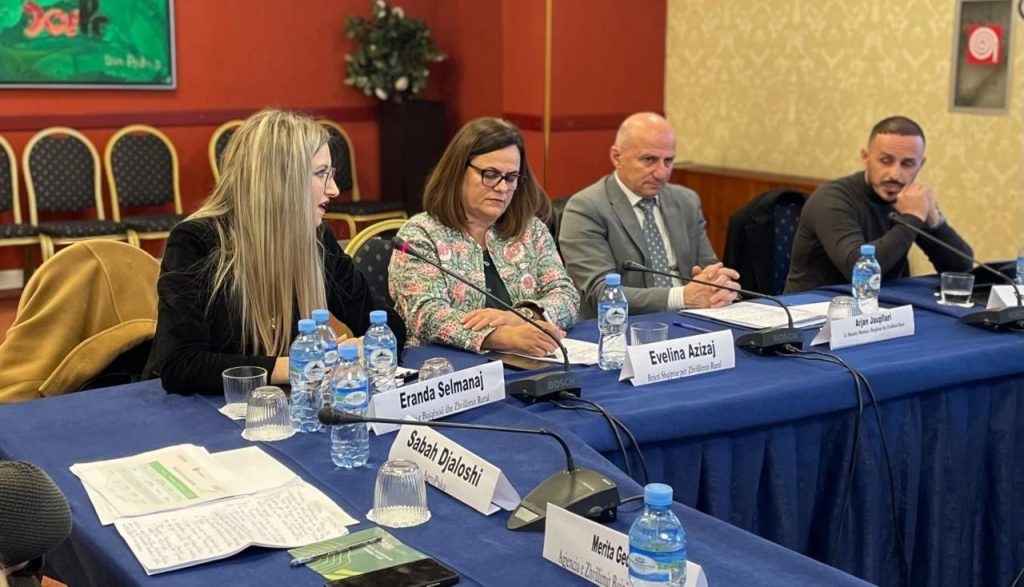
In her opening remarks, Evelina Azizaj underlined that the importance of the event lay in sharing the concrete results and experiences of the QABRs, as well as discussing their implications for public policies in agriculture and rural development. Discussions focused on how this model could be institutionalised, consolidated and scaled up in line with national priorities, IPARD III, and European Union requirements.
As the Albanian Network for Rural Development, we strongly believe in a bottom-up approach that places farmers and rural communities at the centre of policy design. Building sustainable partnerships among public institutions, civil society, academia and the private sector is a prerequisite for developing an advisory system that genuinely responds to the needs of Albanian farmers.
Voices from institutions and the field
The Deputy Minister of Agriculture and Rural Development, Mr Jaupllari, highlighted the urgent need for improved information and support for farmers, linking this challenge to the low number of applications submitted under the national investment support scheme. According to him, solutions cannot come solely from institutions, but must be driven by farmers themselves and by the associations that work closely with them. One of the main concerns raised was the alignment of Albanian farm standards with those of the EU, as well as farmers’ insufficient preparedness to undertake this transformation. Each farmer, he stressed, needs to develop a clear action and financial plan in order to meet these standards.
Ms Eranda Selmanaj, in turn, presented one of the IPARD III measures dedicated to advisory services, which is expected to be accredited among the first group of measures. This measure will support the certification of extension advisors who will inform, advise and assist farmers, further strengthening the role of professional advisory services in the sector.
QABRs: services closer to farmers
Representatives of the Ruralbania project, including Benito Prendi, and of the local associations managing the QABRs, Hafuz Domi and Sabah Djaloshi, shared insights into the establishment and functioning of these centres.
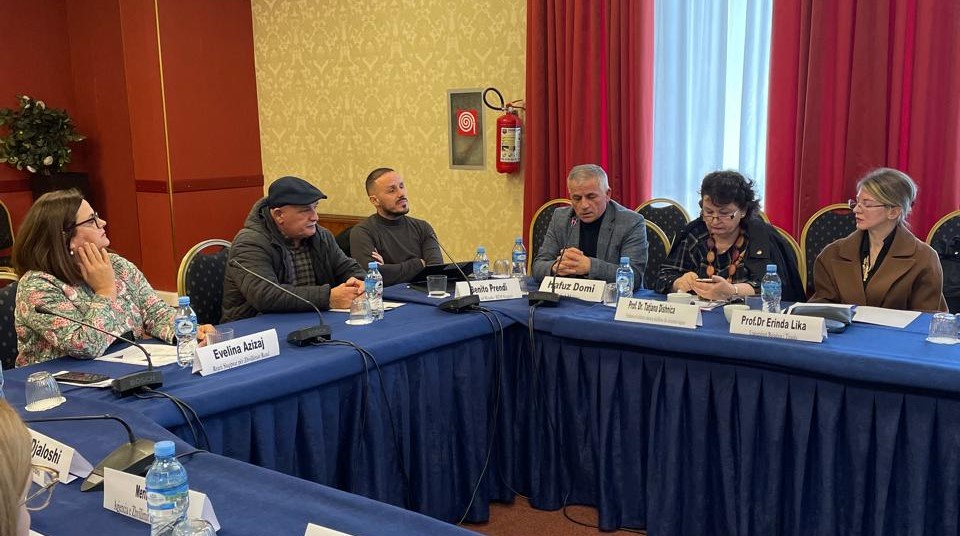
QABRs provide daily, personalised services closer to farmers and play a complementary role to public advisory services. Their work focuses in particular on small farmers and producers, groups that have traditionally been underserved by the public agricultural extension system.
A concrete testimony was provided by farmer Nehmedin Kryemadhi from Dibër, who shared his experience as a beneficiary of the QABR Dibër services. He spoke about the installation of the first hydrocooler line for a cherry producers’ group, technology that preserves fruit quality and freshness and significantly extends shelf life, thereby increasing the economic value of production for farmers.
Results of the independent evaluation: the impact of QABRs on formalisation and access to finance
The event also featured the presentation of the key findings from the independent impact evaluation of the Agricultural and Rural Assistance Centres (QABRs), which confirmed their significant role in improving farmers’ formalisation and access to finance. The findings show that by 2024, 76% of farmers in the project areas were registered with a farm tax identification number, marking a substantial increase compared to 2023.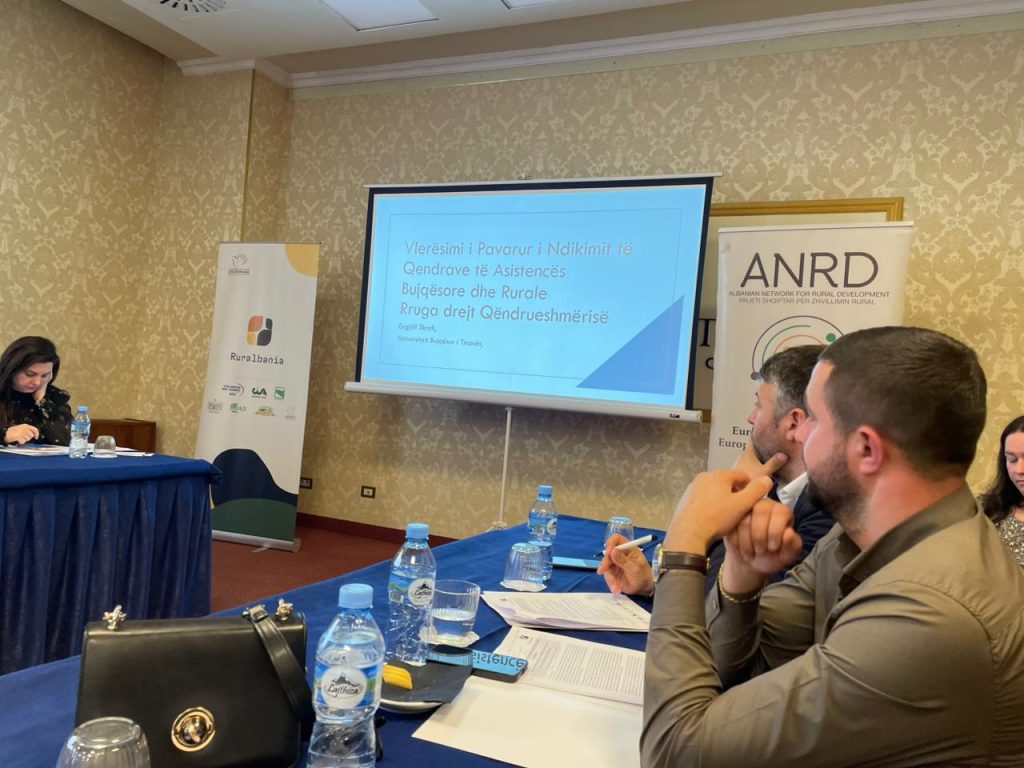
Access to and uptake of the National Support Scheme improved markedly, with application rates rising from 54% to 75%, while access to finance became almost universal, reaching 99% of supported farmers in 2024, compared to 47% the previous year. Administrative data further confirm this positive trend, showing continued growth in access in subsequent years, as well as a significant increase in women’s participation. The evaluation highlighted that QABRs have become a key enabling factor behind these improvements across all three project regions. In addition, recommendations were presented on the development of a financially sustainable and institutional model for QABRs, which provided an important basis for the subsequent discussions during the event.
Current challenges and the way forward
The discussions also highlighted a number of structural challenges: insufficient support provided to small and medium-sized farmers; limited adoption of good agricultural practices; the key role of universities in producing and transferring practical knowledge; the need to strengthen institutional memory to ensure policy continuity; and the importance of integrating scientific research into agricultural and rural policy-making. Municipalities were also identified as key actors in supporting QABRs, within the framework of their exclusive competencies in agriculture and rural development.
Towards a more inclusive advisory system
The event confirmed that the QABR model offers concrete and viable solutions for strengthening Albania’s agricultural information and advisory system. The main challenge ahead is to translate these experiences into sustainable, institutionalised and long-term financed policies. Only through continuous dialogue, inter-institutional cooperation and the active involvement of farmers can a more inclusive advisory system be built—one that not only meets EU requirements, but above all responds to the real needs of Albania’s rural communities.
ANRD and the project’s partner organisations will continue engaging with all relevant stakeholders to raise awareness of the QABR model and to identify solutions that support its long-term sustainability and replication in other regions of the country.
***The event: “Policy Dialogue Event on Agricultural Information and Advisory Services” is organized in the frame of the project Ruralbania: Support and Promotion of Traditional Agricultural Production supported by the Italian Agency for Development Cooperation (AICS) and implemented by the Italo-Albanian consortium led by RTM -Volontari nel Mondo, in partnership with ANRD, ADAD Malore, and AgroPuka.