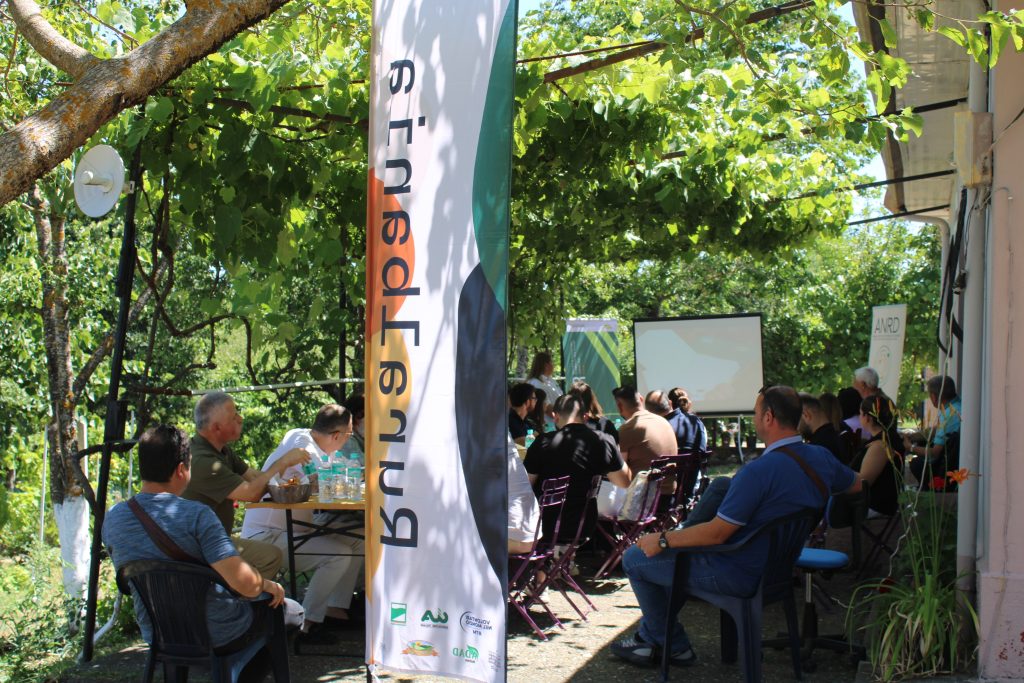

The Albanian Network for Rural Development (ANRD), in cooperation with the agricultural association AgroPuka, organized the second traveling workshop: Partnerships for new agricultural advisory services– an activity that combined travel with the interactive sessions, offering a unique opportunity to closely explore local rural realities.
The workshop brought together around 30 participants in Puka, including representatives from the Ministry of Agriculture and Rural Development, the Italian Agency for Development Cooperation (AICS), the Agency for Agricultural and Rural Development, the Agency for Local Governance Support, civil society organizations, advisory service representatives and other public institutions. The event provided an open platform for discussing challenges and opportunities, as well as future prospect of small-scale agricultural farmers in the forest fruits and beekeeping value chains.
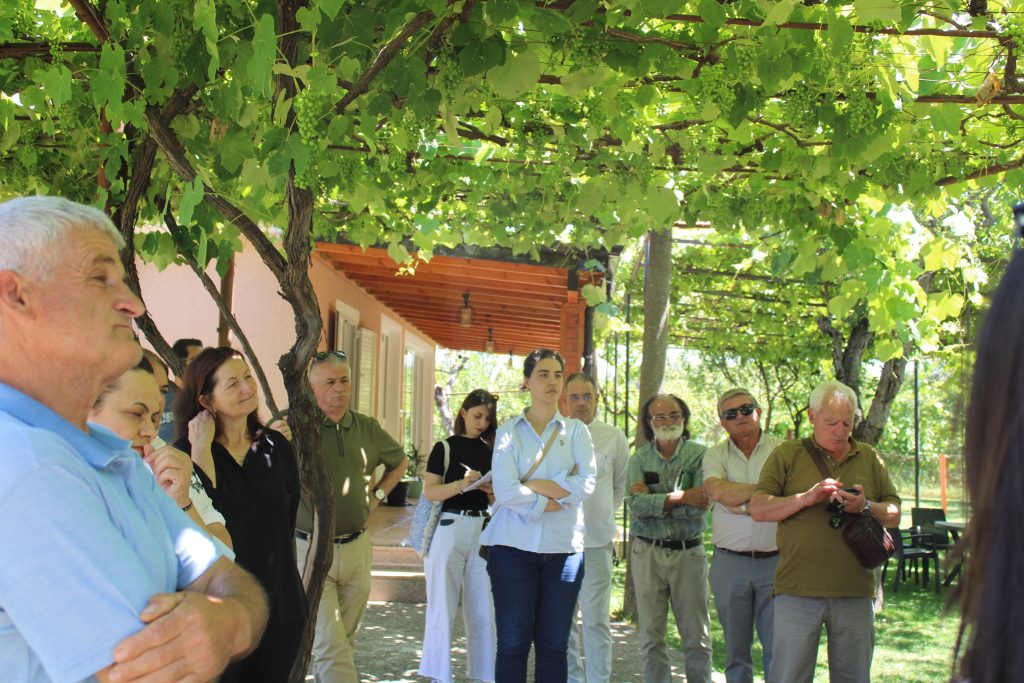
Participants had the opportunity to visit and learn about the model of the Centres for Agricultural and Rural Assistance (CAARs) in Puka. CAAR Puka provides specialised services to farmers, supports the formalization of farms and promotes their sustainability. Led by AgroPuka, this center collaborates closely with public and private agencies to offer training, direct assistance and data collection for analytical purposes.
In his opening remarks, Sabah Djaloshi, the Executive Director of AgroPuka, highlighted the importance of collaboration among institutions to ensure the sustainability of agricultural initiatives: Public institutions, especially local partners, play an important role and must support this new model of agricultural advisory services. Once the projects concludes, it will be our responsibility to ensure these initiatives continue. Therefore, by the end of today, we must generate concrete recommendations for the sustainability of CAARs.”
Lavinia Sgamini, Project Coordinator at RTM Albania, emphasized the importance of the momentum generated by this gathering to enhance collaboration among multiple stakeholders: Since the beginning of this initiative, we have maintained close cooperation and coordination with local actors. The experience sharing events, both nationally and internationally, have provided excellent opportunities to discuss the next steps towards sustainable development of rural communities.
Evelina Azizaj, National Coordinator, ANRD, emphasized the potential of CAARs to foster the sustainable development of rural areas: The establishment of CAARs has generated considerable curiosity and interest in understanding the real impact of these pilot centers. Events like this one help us evaluate how these models can be sustained and replicated in other regions of the country. It is paramount for all institutions to strengthen their roles in using these models to transform villages into attractive places for people to live and invest.
Nicola Ghedin, AICS Tirana, brought to attention the main goal of the Ruralbania project: The Ruralbania project started with a clear idea: to provide knowledge, tools and resources to assist farmers, achieved through the establishment of CAARs. Today’s purpose goes beyond discussion; it serves as an opportunity to exchange ideas, reflect, and explore how these models can be sustainable in the future. The creation of these models was made possible through collaboration among all parties involved, and we are proud of the tangible results of this collective effort.
Following the introduction, Melita Kuçi, Coordinator of CAAR Puka, shared with participants the center’s operations and its concrete impact on the ground. CAAR Puka offers consulting and administrative support to farmers and agricultural enterprises. The center has facilitated grant applications, created market linkages, provided legal and policy information, and serves as a bridge between farmers and public institutions. Through CAAR, farmers receive practical assistance for developing and formalizing their activities.
The participants’ engagement with the CAAR model and its impact in the field led to an inclusive discussion focusing on several key issues:
- The increasing average age of advisory sevices, combined with the high number of small farms, makes it impossible for public advisory services to cover all rural areas effectively.
- Despite strong collaboration between organizations and local governments over the years, the active role of local institutions in agricultural and rural development needs to be strengthened.
- In the context of historical challenges in building trust between farmers and other stakeholders, CAARs have emerged as trusted structures for local farmers. The long-standing experience of local organizations, such as AgroPuka and ADAD Malore, with rural communities has fostered mutual trust, which is essential for empowering farmers.
- The effective selection of CAAR teams based on their expertise in specific value chains identified in each project area has yielded positive results.
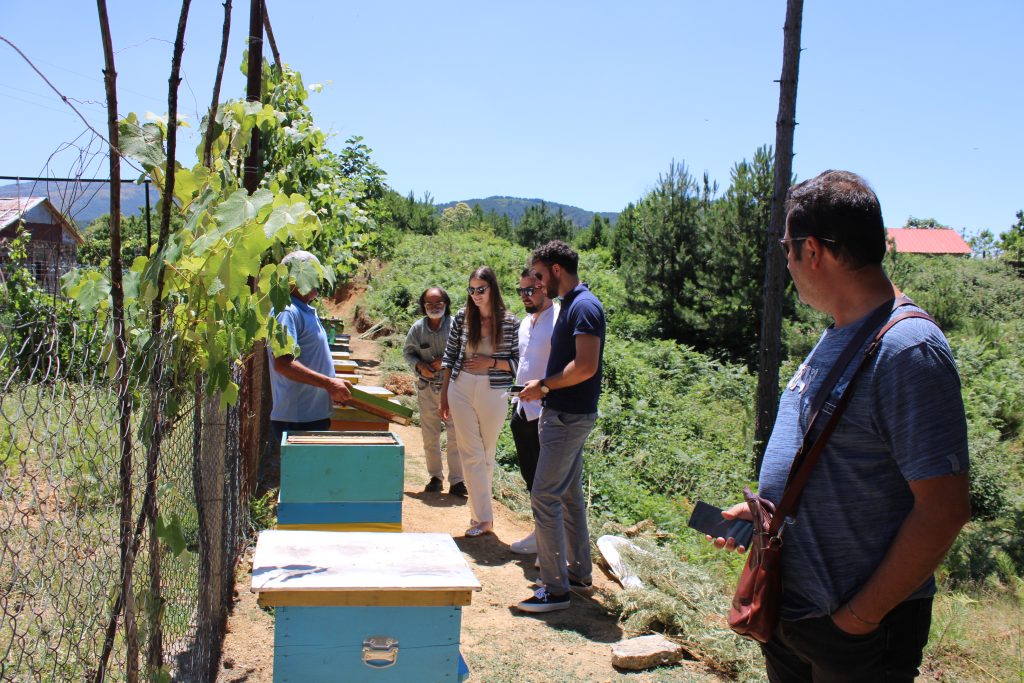
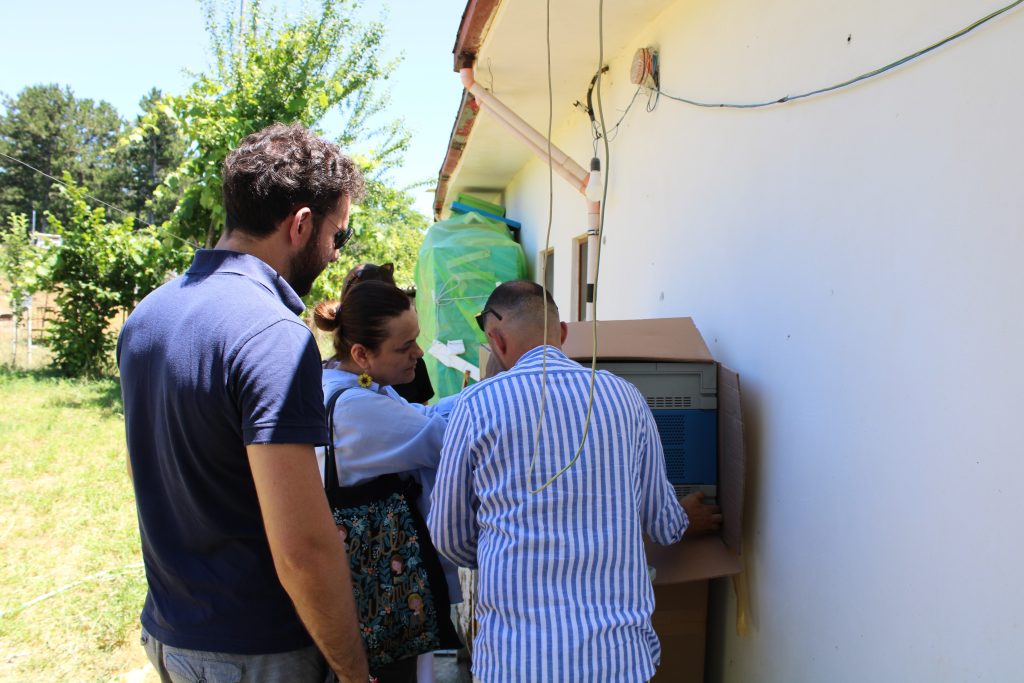
After the fruitful discussions, participants visited “Çobaj Farm,” managed by Minire and Nazmi Çobaj, who are beneficiaries of CAAR services. The farm has over 30 years of experience in beekeeping and honey production. During the visit, an open conversation took place with farmers, who shared their experiences and the concrete benefits of receiving technical and advisory services from CAARs.
The traveling workshop served as an important step toward strengthening partnerships for the delivery of new agricultural advisory services. The open discussions, real-life examples, and presence of key stakeholders demonstrated that the CAARs model holds great potential for expansion and institutionalization. Collaboration among local organizations, public institutions, and rural communities is essential for the sustainable development of rural areas.
***The traveling workshop: “Partnerships for new agricultural advisory services” is organized in the frame of the project Ruralbania: Support and Promotion of Traditional Agricultural Production supported by the Italian Agency for Development Cooperation (AICS) and implemented by the Italo-Albanian consortium led by RTM -Volontari nel Mondo, in partnership with ANRD, ADAD Malore, and AgroPuka.