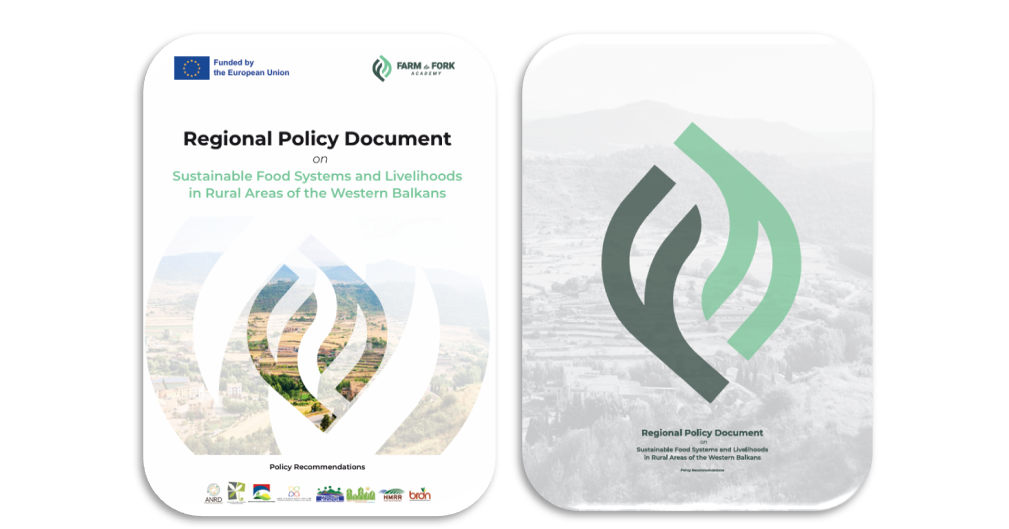
The agriculture sector remains the main pillar of the Western Balkans countries (WB-6), shaping rural livelihoods, food security and cultural identity across Albania, Bosnia and Herzegovina, Kosovo, Montenegro, North Macedonia and Serbia. However, the sector faces persistent structural and institutional challenges including small farms, limited mechanization, restricted access to finance, and weak producer organizations that leave farmers vulnerable to market volatility and
external shocks. Climate change adds further pressure through droughts, floods, and soil degradation, while policy fragmentation and limited institutional capacity continue to hinder the progress toward EU alignment.
In this context, the Regional Policy Document on Sustainable Food Systems and Livelihoods in Rural Areas of the WB-6 provides detailed analyses and provides an evidence-based framework for a more sustainable, competitive and inclusive agri-food system. The study applies the FAO’s Sustainable Food Value
Chain Development approach, ensuring comparability across economic, social and environmental dimensions and alignment with the EU Green Deal, the Farm to Fork Strategy, and the Common Agricultural Policy. The analysis builds on a rich participatory process that involved 6 national consultation processes held between 2023 and 2024 across the WB‑6, with farmers which provided first‑hand evidence on constraints and opportunities in selected value chains in each of the countries. Read the full Regional Policy Document on Sustainable Food Systems and Rural Livelihoods in Western Balkans.